

November 27, 2026
Commercial Waste Storage: Keeping Shared High Street Areas Clean
Improve commercial waste storage in shared high street areas. Learn how businesses can organise bins, agree responsibilities and coordinate collections.
Unused stock, unnecessary packaging and equipment replaced too soon all create waste your business has already paid for. By the time these materials reach the bin, the purchasing cost, storage space and staff time have already been used.
Reducing business waste starts with reviewing what enters your premises. For shops, offices, restaurants and other London businesses, better purchasing decisions and practical reuse habits can help prevent avoidable waste before collection is needed.
Reducing business waste starts with looking at what your business buys, uses and throws away. Choosing one recurring source of waste, such as excess packaging or unused supplies, gives your team a practical starting point.
European Week for Waste Reduction, taking place from 21–29 November 2026, supports this approach through its Material Sufficiency theme, encouraging businesses to use fewer resources and make better use of what they already have.
Deliveries can bring layers of wrapping, oversized boxes and disposable protective materials into your premises. Speak to suppliers about which packaging is necessary and whether suitable alternatives are available.
Ask about returnable crates, reusable delivery containers or packaging take-back arrangements. Where products need protective packaging, discuss whether its quantity can be reduced without increasing damage.
For example, a retailer receiving regular deliveries could ask whether its supplier can collect reusable transit packaging on the next visit. Confirm how containers will be stored and returned so the arrangement remains practical for both teams.Any packaging that cannot be avoided still needs suitable handling.
Our guide to reducing business waste in London explains how reviewing waste streams and collection arrangements can improve the next stage.
Reducing business waste through reuse works best when staff know what to keep, where to store it and when it can be used again. Set aside a clearly identified space for suitable boxes, protective packaging and reusable supplies and only keep materials with a realistic purpose.
The same approach applies to furniture and equipment. Before buying new desks, shelving or storage units, check whether another department or site has suitable items available. Internal redistribution can keep useful products in service and avoid unnecessary purchases. Choose reuse options that suit the task.
A damaged item does not always need replacing. Check whether maintenance, a replacement component or a repair could restore it to use. When buying equipment, consider durability, spare parts and repair support alongside the initial price, products that can be maintained may offer better long-term value.
This approach reflects the priorities in the government’s guidance on applying the waste hierarchy, which places prevention and preparation for reuse ahead of recycling and other recovery.
For reducing business waste, the practical question is straightforward: can the item continue doing a useful job before a replacement is ordered?
Use these questions to identify a manageable starting point:
Choose one or two actions first. Record what changes, such as fewer unused products or fewer boxes discarded after deliveries, then use the results to decide what to tackle next.
Even with better purchasing and reuse, your business will still produce waste. Keep the remaining materials separated according to your agreed collection arrangements and make sure staff understand which containers to use.
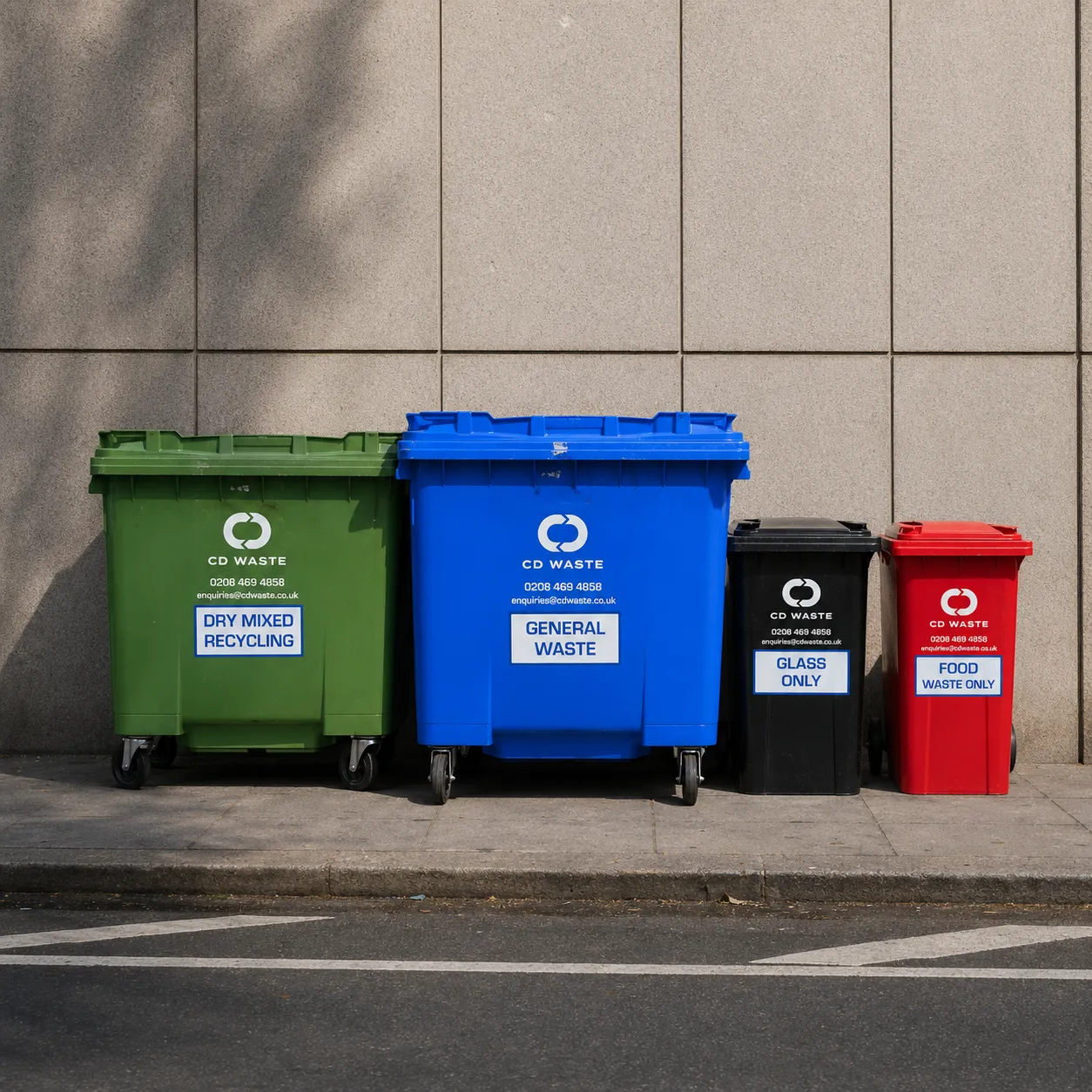
Suitable commercial wheelie bin collections can support the waste streams your business produces, including food, glass and mixed recyclables. As quantities change, review container capacity and collection frequency with your provider.
Your waste arrangements should support the improvements you make across your business. As purchasing, stock management and reuse habits change, your collection setup may need to change too.
At CD Waste, we can discuss your waste streams, available space and collection requirements to help identify a practical service. Our recycling and recovery processes provide routes for recyclable materials and energy recovery for suitable residual waste.
Speak to CD Waste about reducing business waste and arranging suitable collections for your business.
November 27, 2026

November 2, 2026
September 14, 2026
Tell us a little bit about you and the services you require, and well be in touch with a tailored quote.
Stay up to date with the latest industry insights, news, and updates by following our blog and subscribing to our newsletter.


